Ann & Thomas Portal

Blackfoot indians


Blackfoot indians

Blackfoot indians

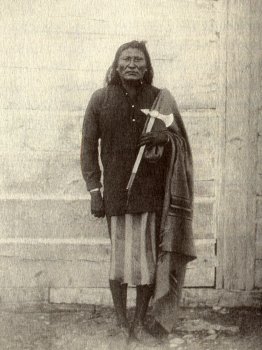
Chief_ Backfoot

Acknowledged as one of the most powerful tribes in the American northwest, the Blackfeet are a confederacy of three independent tribes presently living in Montana and Alberta, Canada. The name "Blackfeet" originates from the distinctive black hue of their mocassins, either painted that color or perhaps darkened by prairie fires.

Modern scholars believe that the Blackfeet migrated westward over three centuries ago from the northern Great Lakes region; their language belongs to the Algonkian linguistic family (centered in that region) and other aspects of their culture, i.e., utensils, pottery, etc. This westward migration is thought to have been caused by the competitive nature (among Indians in the region) of supplying French traders with sufficient animal furs and pelts.

The Blackfeet quickly assimilated in to a nomadic type of existence in the northern plains; plentiful buffalo assured them of a strong future. A shaman or medicine man aided the hunt through the powerful use of the tailsman to help lure the buffalo to the fall.

By the early 1700's, extensive trade was going on with the Midwest and east coast settlers. Buffalo hides were traded for many different items, not the least of which were horses and guns. These two items radically changed the nature of the buffalo hunt; thus there was more time to develop more ornate cultural items, rituals, and myths to tell their stories and educate their young people.

The most sacred yearly event was the sun dance, or Medicine Lodge Ceremony. As a communal event, the Blackfeet and other Plains tribes would gather in mid-summer to fulfill vows to assure the well-being of the community through the continued abundance of the buffalo.

This time of prosperity and growth was soon cut short by the invasion of white settlers into Indian territory.

Undoubtedly, the greatest devastation to the Indian people was the near extinction of the buffalo by the white settlers. Their main food source gone and not having yet taken up the concept of farming, the Blackfeet were forced with total dependence upon the Indian Agency for food. The winter of 1884 was a cruel one; over 600 Indians starved to death reducing the tribe to some 1,400 people.

To help the tribe live in the whiteman's world, the government and religious organizations setup schools and other programs to educate the Blackfeet children and help create jobs on the reservation. The aim of these ventures was to educate the Blackfeet people so that the can have their own governance and self-determination.

Many of the Blackfeet have served with honor and distinctions in the armed services; their example and leadership have been example to younger generations here on the reservation.

Of an estimated 14,000 Blackfeet in the world today, approximately 8,500 live on the reservation. The town of Browning is the seat of the tribal government as well as the site of the annual North American Indian Days celebration in mid-July.
The Blackfeet were people of the plains and buffalo. They never used canoes or ate fish. To the Blackfeet, rivers and lakes hold a special power because they are inhabited by the Suyitapis, the Underwater People. Painted lodge covers, medicine bundles, and other sacred items were transferred to the tribe from the Suyitapis. In turn, their power and domain are respected by the tribe. Today, the reservation waterways and lakes are touted as premier fishing spots. Yet most tribal members maintain the traditional ban on fishing.

In 1896, at the urging of George Bird Grinnell, founder of the Audubon Society, the tribe, then reduced to fourteen hundred members, signed a $1.5-million agreement with the federal government relinquishing its western territory. The relinquished area became Glacier National Park on May 11, 1910. Transcripts of the meeting include a closing speech by White Calf, leader of the tribe. In it, he referred to Ninastako, Chief Mountain, a sacred place of the tribe, stating, "Chief Mountain is my head. Now my head is cut off. The mountains have been my last refuge." The speech echoes the history of the tribe's relationship with an encroaching new order.

The Blackfoot Indian Reservation today is a fifty-mile square of mountains and foothills, lakes and rivers falling eastward onto the plains. The 1,525,712-acre reserve is but a portion of the 26-million-acre tribal homeland recognized by the federal government in 1855. The population today is approaching the numbers reported by Catlin and Prince Maximilian, and half of the fifteen thousand enrolled tribal members live on the reservation. Enrollment in the tribe is set forth by a rule inspired by the Bureau of Indian Affairs. Only those with the requisite "blood quantum" (today, people with one-fourth degree, or more, blood lineage) can be tribal members. Enrolled members are issued identification cards indicating their blood quantum degree and enrollment number. Membership in the tribe entails a variety of tribal rights and responsibilities, ranging from use of communal lands to serving on the governing body, the Blackfoot Tribal Business Council.

Tribal headquarters are located at the Blackfoot Indian Agency in Browning, Montana, the largest of five reservation communities. Legend has it that the wife of the agency officer, D. M. Browning, selected the current site: overwhelmed by the beauty of acres of wildflowers alongside Willow Creek, she convinced her husband to move the agency there. Actually, the decision was made by the Great Northern Railroad, whose tracks pass nearby.

With the extermination of buffalo in 1883, the Blackfeet were left without food, and a large number starved to death the following winter. The Starvation Winter is the darkest period in the history of the tribe. Another dark time was Baker's Massacre. In the freezing dawn of January 23, 1870, the Second United States Regiment of Cavalry, under Major Eugene Baker, massacred Heavy Runner's camp at Willow Rounds, Montana. A total of 173 Blackfeet were killed, mostly women and children, and 140 were taken prisoner. The prisoners, many with smallpox, were chased onto the freezing prairie and abandoned. Descendants of the victims recount the event as part of tribal and family histories.

Much of the foundation for contemporary Blackfoot life was laid between 1884 and 1910. During that period, the tribe's exceedingly high death rate began to decline and the population began to grow. Catholic and government boarding schools were built on the reservation. The schools exerted enormous effort to separate students from their tribal language and cultural ways. Government officials and teachers emphasized vocational training and "civilized" behavior.


Kontakta oss | © 2004, 2005, 2006 Thomas Lindström