 To a little girl growing up in war-battered England in the 1940s, the stories of Tarzan and Dr. Dolittle, who lived in the jungles of Africa with their wild companions, were enchanting and inspiring. That girl was Jane Goodall, and while she grew up determined to share a forest home with African animals, she may not have expected that doing so would lead her to fame as a naturalist, one who changed forever the way we see the chimpanzee, our closest primate relative.
  Many scientists were skeptical, even scandalized, by Leakey's suggestion that a young woman who had never gone to college could succeed as a lone field researcher in the chimpanzees' rugged mountain home. Nevertheless, in 1960, Goodall began her research at Gombe Stream National Park in the East African nation of Tanzania.
Jane Goodall's Story |
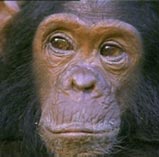
Her revolutionary discoveries about chimpanzees are memorably documented in the NATURE program JANE GOODALL'S WILD CHIMPANZEES. The program gives viewers a rare look into the chimpanzee's world by chronicling the tense struggle between two brothers, Freud and Frodo, for leadership of their troop. It also captures some of the chimp behaviors, from tender hugs to ruthless killing, that intrigue the scientists who investigate the origins of our own habits. Soon after becoming accepted by a local troop, Goodall realized that what she was observing challenged virtually every conventional notion about chimpanzees. Where many researchers saw "primitive" apes living a simple existence, Goodall found highly intelligent, emotional creatures living in complex social groups. Most dramatically, her work shattered two long-standing myths: the idea that only humans could make and use tools, and the belief that chimps were passive vegetarians. Goodall's discoveries were brought to the public's attention by a 1965 NATIONAL GEOGRAPHIC television documentary, which vaulted her to international prominence and quieted her doubters. That same year, England's Cambridge University awarded Goodall an honorary doctorate; she is one of only a handful of people to earn that distinction without having first completed four years of college. Goodall lived at Gombe almost full-time until 1975, accumulating a wealth of long-term data still valued by today's researchers. Since then, she has founded Jane Goodall Institutes in nine countries, including Tanzania, the United Kingdom, and the United States. These days, she continues her studies from afar, focusing her attention on a passionate campaign for chimpanzee conservation and research and speaking against the nonessential use of chimps in medical research. She travels the world giving speeches (often punctuated by her haunting renditions of chimp calls) and raising funds for the half-dozen chimpanzee refuges she has established in Africa. Compassion and concern for the species has swelled in recent years, partially due to Goodall's proof of the similarities between chimps and humans. At the same time, however, there is a mounting interest in using them for medical research -- an unfortunate one, in Goodall's view. "Some scientists believe chimpanzees can be useful in finding out more about human diseases and searching for cures because they can be infected with otherwise uniquely human viruses," she regrets. But, she cautions, "it isn't only human beings who have personality, who are capable of rational thought [and] emotions like joy and sorrow." Coming to grips with this, she hopes, will help resolve "many ethical problems [regarding how] we use and abuse animals."
|